Introduction
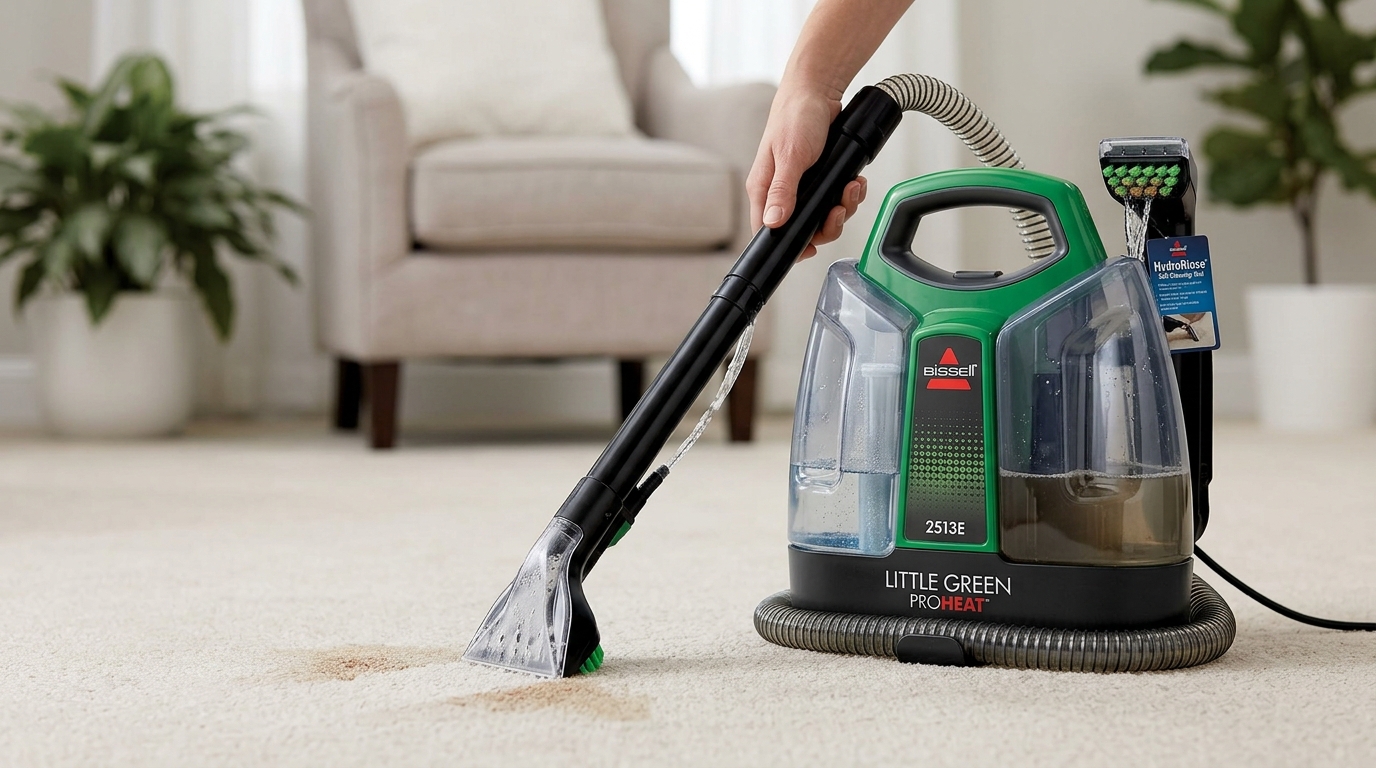
Cleaning tools tend to be judged by how they perform on the worst day, not the average one. The day a full mug of coffee lands on a light-colored armchair, or the morning a kid’s fast-food bag leaks into the back seat, is the day people wish they had something better than a roll of paper towels. The BISSELL Little Green ProHeat Portable Deep Cleaner, model 2513E, is meant for days like that. It’s a compact, heated spot cleaner that BISSELL also positions as a car and auto detailer, and it comes with a self-cleaning HydroRinse tool intended for carpet and upholstery.
This article looks at what the 2513E is designed to do, where its heating and rinsing features fit into ordinary household routines, and what’s worth weighing before choosing it. It’s an informational overview, not a review based on hands-on use, and no personal testing is being claimed. The descriptions below reflect the general product category and commonly listed features. Specifics such as tank capacity, hose length, warm-up time, and which attachments are in the box can differ by retailer bundle, so confirming them on the product page is a smart step before buying.
The larger question is whether a small machine with a heater is a better fit for a home than a simpler cold-water spot cleaner or a full-sized carpet cleaner. There isn’t a universal answer. It depends on what kinds of messes actually happen, how often they happen, and how much storage space and patience someone has. The sections below are meant to make that decision easier.
Key Features
A Built-In Water Heater
The feature that sets this model apart from simpler portable cleaners is that it warms the water during use. Warm water generally helps cleaning solutions break down oily, greasy, and sugary residue more readily than cold water. That’s the same reason dish soap works better in a warm sink than a cold one. For a household that regularly deals with sticky spills, greasy fingerprints on upholstery, or grimy car seats, that added capability can be appealing.
The heater also brings a few realities. The machine needs a little time to bring the water up to temperature, so it isn’t ready the instant it’s switched on. It draws more power than a simple cold-water unit. And heated components add parts that a basic machine doesn’t have. None of that is unusual, but it’s worth keeping in mind if simplicity is a top priority.
The HydroRinse Tool
Cleaning machines have a way of becoming unpleasant if they aren’t rinsed out. Dirty water lingers in hoses and pathways, and odors follow. The HydroRinse tool is designed to address that by helping flush clean water through the system after a cleaning job. For people who use a machine now and then and tend to put it away without much thought, an easier rinse routine can make a real difference in how the unit smells and performs months later.
It’s worth remembering that a self-rinsing feature reduces maintenance effort but doesn’t eliminate it. Tanks still need to be emptied, parts still need to dry, and the manual’s care instructions still apply.
A Compact, Carry-Anywhere Body
Little Green machines have long been known for being small enough to lift with one hand. That matters because the mess is rarely convenient. It might be on a stair tread, wedged into the seam of a car seat, or at the far end of a rug. A machine that’s easy to pick up is more likely to be used quickly, and stains generally respond better when they’re treated early.
Spray and Suction in One Device
Like other portable extractors, this type of machine applies a cleaning solution and then uses suction to pull the liquid back out along with loosened dirt. That combination cuts down on the number of separate tools needed for a cleanup. There’s no need to juggle a spray bottle, a scrub brush, and a pile of towels, and less moisture is usually left behind compared with cleaning by hand.
Attachments Suited to Home and Vehicle
Because the product is described as both a spot cleaner and an auto detailer, it typically comes with hand tools intended for upholstery, stairs, and tight areas such as seat seams. Different surfaces call for different tools, and having a suitable attachment can help the machine work more effectively on padded seats than it would on flat carpet. Included accessories can vary, so checking the listing for the exact set is a good idea.
A Tank Sized for Small Jobs
The water tanks on portable machines are small on purpose, since a bigger tank would make the unit heavier and harder to carry. For a single stain or a few small spots, that’s usually sufficient. For larger areas, expect to refill along the way. That trade-off is part of what makes this a spot-cleaning tool rather than a whole-room solution.
What Warm Water Can and Can’t Do
Heat gets plenty of attention in product descriptions, so it helps to think about it more carefully.
Warm water can help with oily, greasy, or sticky soils. Cooking oil, butter, sauces, and the everyday skin oils that build up on armrests and headrests are the types of residue where warmth tends to make a difference. It can also help cleaning solutions work on some older, dried-in marks, though results vary and some stains may not fully lift.
Heat is not a universal solution, though. Certain dyes, inks, and pigments may not respond much better to warm water than cold. Some fabrics are sensitive to temperature or moisture, and dyes in older or inexpensive textiles can bleed. That’s why care labels matter. Furniture often carries a cleaning code that indicates whether water-based cleaning is appropriate, and it’s worth checking before using any liquid method. Testing a small, hidden area first is a simple habit that can prevent an expensive mistake.
There’s also a common trap: more capability can encourage overuse. Soaking upholstery with hot water isn’t better cleaning. It can lengthen drying time and put unnecessary moisture into the padding underneath. Working in modest passes and extracting thoroughly is generally a more sensible approach.
How It Can Be Used
Rescuing a Sofa After a Spill
Living-room furniture takes a lot of abuse. Snack crumbs, drink rings, and the greasy residue left by hands and pets all accumulate over time. A compact heated cleaner can be used to spot-treat cushions and arms without cleaning the whole piece. Following the furniture’s care code and manufacturer recommendations is essential here.
Refreshing a Car Interior
Vehicles are one of the main reasons people consider a machine like this. Seats, floor mats, and cargo areas collect everything from spilled coffee to muddy boots. Because the unit can be carried outside, it’s practical for a driveway or garage cleaning session. It’s suited to targeted refresh cleaning rather than restoring an interior that has been neglected for years.
Dealing with High-Traffic Carpet Spots
Even a vacuumed carpet can develop dull, darkened patches in front of doors, along hallways, and near favorite chairs. A portable cleaner can be used on just those zones, which is often more practical than cleaning an entire room.
Cleaning Stairs
Carpeted stairs are awkward for large machines. The steps are narrow, and the machine has to be moved constantly. A small unit with a handheld tool is generally easier to manage on stairs, since the base can sit on a step while the hand tool does the work.
Handling Pet Accidents
Households with animals encounter unpredictable messes. Prompt treatment usually gives the best chance of success, because liquids can soak into fibers and padding. Some people choose formulas designed for pet messes, following the machine manufacturer’s guidance. Persistent odors can require repeated treatments or a different approach, so expectations should be realistic.
Refreshing Rugs, Runners, and Mats
Small rugs and entry mats catch dirt and moisture. Many can be spot cleaned, but delicate or natural-fiber rugs may not tolerate heat or moisture well, so care labels should be checked before starting.
Working in Campers, RVs, and Boats
Recreational vehicles have cushions, carpet, and tight spaces that are difficult to clean with bulky equipment. A compact machine can be a convenient fit, provided there is access to power and water.
Who It May Be Suitable For
People Who Regularly Face Greasy or Sticky Messes
If the typical household mess involves food, oil, or residue from cooking and snacking, warm water may offer more value than it would for someone who mostly deals with light dust and the occasional drink spill.
Drivers Who Prefer Doing Their Own Upkeep
Someone who enjoys maintaining their vehicle themselves may appreciate having a machine designed with auto interiors in mind. It offers a way to treat seats and mats without scheduling a professional detail for every incident.
Parents and Pet Owners
Small children and animals produce a steady stream of small accidents. A compact machine that’s easy to grab and easy to rinse out can suit households where the mess arrives on no particular schedule.
Renters With Limited Storage
Full-sized carpet cleaners can be awkward to store in an apartment. A smaller machine fits in a closet and can be used on carpet, furniture, and a car, which may be appealing for people with limited space. Renters should also check lease terms in case there are rules about cleaning methods.
Households That Already Have a Larger Cleaner
Owning or renting a full-sized machine for occasional deep cleans doesn’t rule out a small one for day-to-day incidents. Setting up a big machine for one spill is rarely practical, and a small one fills that gap.
Important Things to Consider
It Still Isn’t a Whole-Room Machine
The word “deep” in the product name shouldn’t be read as a promise of large-scale cleaning. The tank is small and the design is compact. Anyone who wants to clean entire carpeted rooms on a regular basis will likely find a full-sized machine more efficient.
Warm-Up and Wait Times
The heater takes time to bring water up to temperature, and treated areas take time to dry. Depending on humidity, ventilation, and material thickness, drying can take several hours. Fans and open windows help, and keeping foot traffic off the area is a good idea.
Material Sensitivity
Fabrics vary widely in how they handle heat, moisture, and cleaning solutions. Care tags, manufacturer guidance, and a hidden-area test are all sensible precautions. For valuable or delicate items, professional advice may be the safer choice.
Solution Compatibility
Manufacturers typically recommend specific cleaning formulas, and some may not be intended for use with heated water. Using unapproved products could affect performance or damage the machine, so the manual is worth reading.
Older Stains Can Be Stubborn
Fresh spills are usually easier than stains that have been sitting for weeks. Heat may help in some cases, but it doesn’t guarantee that a mark will disappear. Repeat treatments may help, and some stains may remain visible.
Routine Care
Emptying the tanks, using the rinse tool, wiping down attachments, and letting everything dry before storage are all part of keeping the machine in good shape. Skipping these steps can lead to odors and buildup.
Noise and Power Use
Suction motors are loud, and a heating element adds to power draw. It’s usually manageable, but people with noise-sensitive pets or small children may want to plan cleaning times accordingly.
Comparison of General Categories
Heated Portable Cleaners vs. Cold-Water Portable Cleaners
Cold-water models are simpler, ready to use immediately, and have fewer components that could wear out. Heated models add warm-water cleaning that may help with certain residues, but they add complexity and a short warm-up. A household with mostly light, fresh spills may be perfectly served by a cold-water model, while one dealing with greasy or set-in soils may value heat.
Portable Cleaners vs. Full-Sized Carpet Cleaners
Full-sized machines offer larger tanks and broader coverage, which suits whole-room cleaning. They are bulkier and take longer to set up and put away. Portable machines trade scale for convenience, and many households end up seeing them as companions rather than competitors.
Multi-Purpose Portable Cleaners vs. Dedicated Auto Detailing Equipment
Dedicated automotive tools can offer specialized accessories and higher performance for vehicle interiors. A multi-purpose portable cleaner covers home and car in one unit, which suits people who want flexibility rather than specialization. Anyone who details vehicles regularly may want to compare both approaches.
Portable Cleaners vs. Professional Cleaning Services
Professionals bring stronger equipment, training, and experience with large or delicate jobs. A portable cleaner is better thought of as a maintenance and incident-response tool than a replacement for professional work.
Frequently Asked Questions
What does the heater do?
It warms the cleaning water, which can help cleaning solutions work more effectively on certain residues such as oils and grease. Results still depend on the stain and the material.
Is heated cleaning suitable for every fabric?
No. Some materials and dyes are sensitive to heat or moisture. Care labels and a hidden-area test are recommended before treating any new surface.
What is the HydroRinse tool used for?
It’s intended to help flush clean water through the hose and internal pathways after cleaning, which can reduce leftover dirty liquid and make maintenance easier.
Can this machine be used on car seats and floor mats?
It’s positioned as a car and auto detailer as well as a household spot cleaner, and portable cleaners in this category are commonly used on vehicle interiors. Material care instructions and manufacturer guidance should still be followed.
Will it clean an entire carpeted room efficiently?
It isn’t designed for that. The compact body and small tank are better suited to spots and small areas.
How long does drying usually take?
It varies with the material, the amount of liquid used, and the room’s conditions. Many spots take several hours, and thick fabrics or humid conditions can take longer.
Do I need a specific cleaning solution?
Manufacturers usually recommend particular formulas, and following that guidance helps protect the machine and the surface being cleaned.
Conclusion
The BISSELL Little Green ProHeat 2513E adds two useful ideas to the portable spot cleaner: warm water for tackling certain kinds of residue, and a rinse tool meant to make upkeep less of a chore. Paired with its car and upholstery positioning, it’s a reasonable candidate for households that face greasy or sticky messes, for drivers who like to maintain their own interiors, and for parents and pet owners who want a machine that’s quick to grab.
It’s equally important to keep expectations grounded. This is still a compact machine for spots, not a replacement for a full-sized cleaner or a professional service, and heat won’t fix every stain or suit every fabric. Warm-up time, drying time, and careful testing on delicate materials are all part of using it well. The best way to decide is to think about the messes that actually show up at home, how often they happen, and whether the added features are worth the extra complexity compared with a simpler model.