Introduction
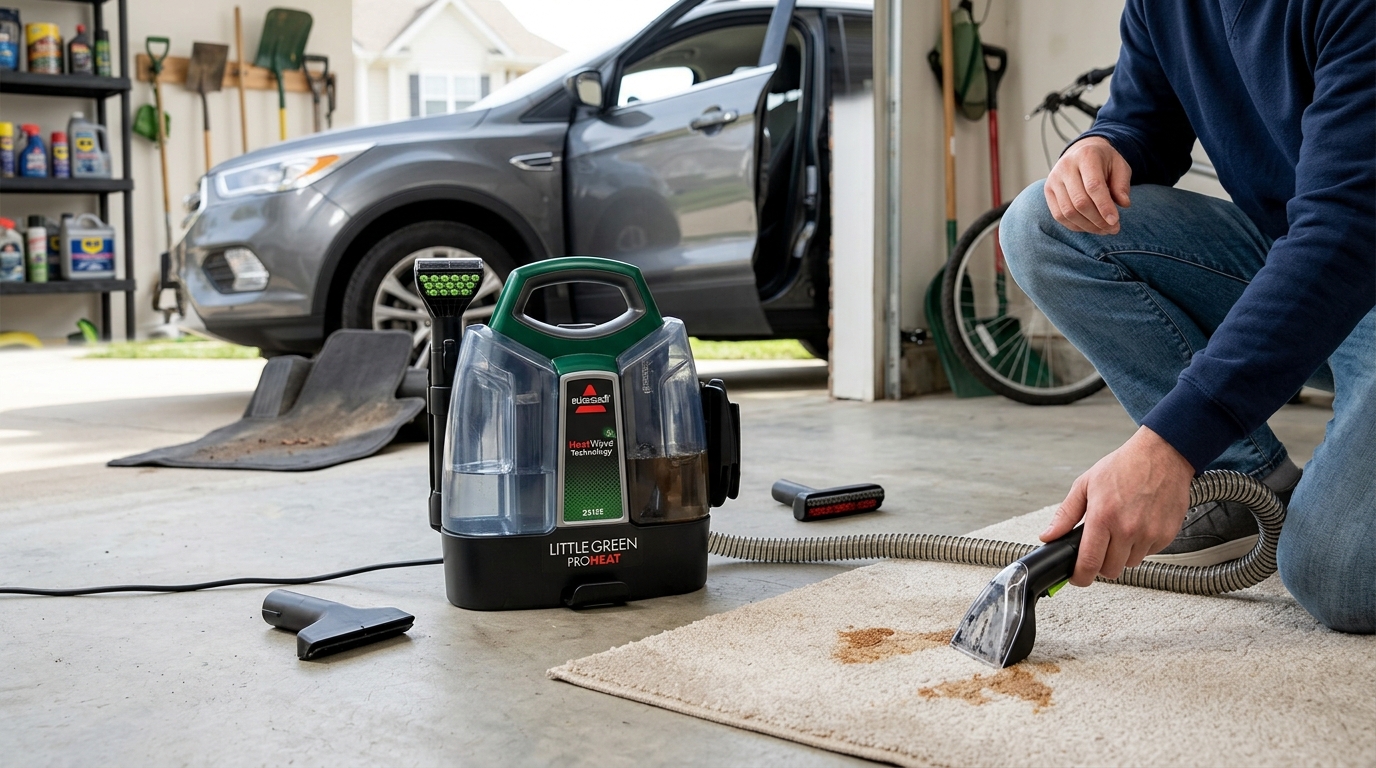
Spot cleaners have a reputation for being simple, and for the most part that’s accurate. Fill the tank, spray, extract, and move on. Heated models add one more variable to that routine, and it’s worth understanding why. The BISSELL Little Green ProHeat Portable Deep Cleaner, model 2513E, is marketed as both a household spot cleaner and a car and auto detailer, and it includes a self-cleaning HydroRinse tool for carpet and upholstery. Its distinguishing feature is heat: the machine warms the cleaning water as part of the process, which is meant to help with the kinds of stains that cold water sometimes struggles to shift.
This article covers what the 2513E is designed to do, where a heated portable cleaner tends to be useful, and what to think through before choosing one over a simpler cold-water model. To be clear about the approach, this is an informational overview and not a hands-on review. No personal testing is being claimed, and the descriptions here reflect the general product category and commonly listed features. Details such as tank capacity, heating time, hose length, and included accessories can vary by retailer bundle, so it’s worth confirming them on the product page before making a decision.
Portable cleaners occupy a practical middle ground between hand-blotting a stain and setting up a full-sized carpet cleaner. Adding heat and a dedicated rinse tool pushes that middle ground a little further toward deep cleaning, while keeping the machine small enough to store in a closet or carry to a driveway. Whether that added capability matters comes down to the kinds of messes a household actually deals with.
Key Features
Heated Cleaning
The headline feature is the built-in heater, which warms the water used during cleaning. The general logic is that warm water helps cleaning solutions dissolve and loosen residues such as grease, oils, and dried-on food more effectively than cold water can. Anyone who has washed a greasy pan knows the principle: the same detergent tends to work better in warm water than in cold.
There are a few practical points to keep in mind with any heated portable cleaner. Heating isn’t instant, so there’s typically a short wait while the water reaches its working temperature. The machine also draws more power than a simple cold-water unit, and the heating element adds complexity compared with a basic design. Whether those trade-offs are worthwhile depends on how often a household faces stubborn, greasy, or set-in stains.
HydroRinse Self-Cleaning Tool
The 2513E includes what BISSELL calls a HydroRinse tool. The purpose of a self-cleaning tool like this is to help flush the hose and internal pathways with clean water after a job, so that leftover dirty liquid doesn’t sit inside the machine. That matters because standing residue can lead to odors and buildup over time, especially in machines that handle pet accidents, food spills, or muddy water.
It’s a fairly small detail, but maintenance is one of the main reasons cleaning appliances end up neglected. A machine that’s easy to rinse out is more likely to be kept in good condition, which affects both performance and how pleasant it is to use next time.
Portable Size and Carry Handle
Like the rest of the Little Green family, this model is designed to be carried, not wheeled. Being able to lift the machine with one hand and take it to the stairs, the back seat, or the far corner of a room is central to what makes the format useful. A compact machine that’s convenient to grab tends to get used sooner after a spill, and fresh stains are generally easier to treat than old ones.
Spray-and-Suction Cleaning
The basic mechanics are the same as other portable extractors. Solution is sprayed onto the stained area, and suction pulls the liquid back up along with the loosened dirt. Having both actions in a single device reduces the need for spray bottles, brushes, and towels, and it leaves less moisture behind than manual cleaning methods typically do.
Tools for Upholstery and Auto Interiors
Because the product is positioned as both a spot cleaner and a car and auto detailer, it commonly comes with hand tools intended for upholstery, stairs, and tighter spaces. These attachments are what let a small machine handle the differences between a flat carpet, a padded seat, and the seams of a car interior. The exact set of tools varies by bundle, so the product listing is the best place to confirm what’s included in the box.
A Modest Tank Size
To keep the machine portable, the water tanks are small compared with those on a full-sized cleaner. For one or two stains, that’s typically enough. For larger jobs, expect to refill along the way. This is a normal characteristic of the format and one of the reasons portable machines are best thought of as spot tools.
Why Heat Matters, and When It Doesn’t
Heated cleaning gets a lot of attention in marketing, so it’s worth thinking about where it helps and where it doesn’t.
Warm water can improve the performance of many cleaning solutions on greasy or oily residue. Food spills involving butter, cooking oil, or sauces, along with the skin oils and body soils that build up on car seats and sofa arms, are the type of soiling where warmth often makes a noticeable difference. Warm solution can also help with older, dried-in stains, though results still vary and some marks may not fully disappear.
Heat isn’t a cure-all. Some stains, such as certain dyes, inks, or pigments, may not respond much better to warm water than to cold. On some fabrics, heat can be a risk. Certain delicate materials, silk, and some natural fibers can be sensitive to temperature or moisture, and dyes in cheap or older fabrics can bleed. That’s why checking the care tag on upholstery and testing on a hidden area first is a habit worth building, particularly with a heated machine.
There’s also a useful psychological point: a machine with more capability may tempt people to be aggressive with it. Saturating fabric with hot water isn’t necessarily better, and overly wet upholstery takes longer to dry and can lead to problems with padding underneath. Working in short passes and extracting thoroughly is generally better than flooding an area.
How Wet Extraction Works
The underlying method behind portable cleaners is wet extraction. A mixture of water and solution is applied to the stained area, where it helps loosen dirt and residue from the fibers. Suction then draws the liquid back up, taking the dissolved grime with it instead of leaving it to dry in place.
That differs from blotting, where a cloth mostly absorbs whatever is sitting on the surface. Blotting is entirely reasonable for a small, fresh spill, but it doesn’t reach deep into thick carpet or padding, where residue can hide. Extraction is based on the principle that rinsing and removing liquid is more thorough than trying to soak it up by hand.
The heated version adds warmth to the first step, which may help loosen certain residues more readily. The second step, removing the liquid, is just as important as the first, because leftover moisture and cleaning solution can leave a sticky residue that attracts dirt. Making a few extra passes with suction only, without spraying, is a common technique for pulling out as much moisture as possible.
How It Can Be Used
Carpet Stains and High-Traffic Spots
Entryways, hallways, and areas in front of favorite chairs tend to collect grime that a regular vacuum doesn’t remove. A heated spot cleaner can be used to treat these particular zones without cleaning the whole room. It’s a useful approach for anyone who wants to refresh problem areas between deeper cleanings.
Couches, Chairs, and Ottomans
Upholstery collects body oils, food residue, and everyday dirt, especially on arms and seat cushions. Machines like this are commonly used to spot treat these areas. Checking the furniture’s cleaning code and the manufacturer’s instructions is important before using any liquid on upholstery, since some fabrics are labeled for solvent-only cleaning.
Car Seats and Floor Mats
The auto detailing positioning is a large part of this machine’s identity. Vehicle interiors see spilled drinks, crumbs, muddy shoes, and grease from fast food. Compact size and the ability to carry the unit outside to the vehicle make this a practical option for people who want to maintain their car’s interior without a professional detailer for every mess. It’s designed for spot treatment and refresh cleaning, not for restoring a heavily neglected interior.
Stairs
Carpeted stairs are awkward for large machines because the geometry is tight and the machine has to be moved repeatedly. A handheld tool and a compact base can be easier to manage on steps, where a large machine would be cumbersome.
Pet Messes
Households with pets deal with unpredictable accidents, and warm solution may help with certain residues. As with any cleaning method, fresh accidents tend to be easier than old ones, and odors can persist if liquid has soaked into padding. Some people choose to use cleaning formulas designed for pet messes, following the machine manufacturer’s recommendations.
Rugs and Runners
Smaller rugs, entry mats, and runners can benefit from spot treatment. Rugs made from delicate or natural materials may not be suitable for heated cleaning, so checking care labels first is wise.
Campers, RVs, and Boats
Recreational vehicles and boats often lack easy access to large cleaning equipment. A compact machine can be handy for cleaning cushions, carpeting, and upholstery in these spaces, though access to power and water still needs to be considered.
Who It May Be Suitable For
Households with Stubborn or Greasy Messes
Families that often deal with food spills, sticky residues, or grease may see more value in a heated machine than those who mainly face light dust and occasional drinks.
Car Owners Who Prefer Doing Their Own Upkeep
For drivers who like maintaining their vehicles themselves, a portable cleaner with auto-focused tools can be a useful addition. It offers a way to treat seats and mats without needing to book a detailer for small issues.
Pet Owners
Animals produce a steady stream of small messes. A machine that can be pulled out quickly and rinsed out easily may suit pet households, especially those that already know how they like to handle accidents.
Parents of Young Children
Children are experts at generating spills, smears, and sticky handprints. A compact cleaner can make cleanup faster and less stressful, particularly if it’s stored somewhere easy to reach.
Renters and Small-Space Residents
Compact appliances are easier to store, and renters may want a way to keep carpets and furniture in good condition without renting a large machine. Note that renters should also be mindful of lease terms and any restrictions on cleaning methods.
People Who Want a Companion to a Larger Machine
Someone who owns or rents a full-sized cleaner for periodic deep cleans might still want a small unit for day-to-day incidents. The two serve different purposes.
Important Things to Consider
Warm-Up Time
Because the water needs to heat before it reaches its working temperature, the machine is not truly instant. That’s a small delay in exchange for improved performance on certain stains, but it’s worth knowing for anyone who expects to grab it and start immediately.
Fabric Sensitivity to Heat and Moisture
Some fabrics and dyes react poorly to heat or moisture. Testing an inconspicuous area first, following care labels, and not oversaturating the material can help avoid damage. When in doubt, professional advice for delicate or valuable pieces is a sensible choice.
Not a Whole-Room Machine
Despite the deep-cleaning language in the product name, this is still a portable spot cleaner. The tank is small and the design is compact. Anyone who wants to clean entire carpeted rooms on a regular basis will likely find a full-sized machine more efficient.
Drying Time
Every wet cleaning method leaves the treated area damp for a while. Warm water may help in some cases, but drying still takes time, often several hours depending on humidity, airflow, and material thickness. Opening windows, running a fan, and keeping foot traffic off the area can help.
Cleaning Solution Compatibility
Manufacturers typically recommend particular formulas, and using unsuitable products may affect performance or the equipment. Some formulas are not designed for use with heated water, so checking the manual is a good idea.
Maintenance and Storage
A rinse tool makes it easier to flush the machine after use, but it still needs to be emptied, rinsed, and dried. Skipping maintenance can lead to odors and buildup over time. Storing the unit with the tanks open and dry helps avoid mustiness.
Older and Set-In Stains
Heat may help with some stubborn residues, but it doesn’t guarantee results. Old stains can bond with fibers and may need repeat treatments. Some marks, such as dye transfers, may never fully come out.
Noise and Power Use
Suction motors are loud, and heating elements draw power. It’s usually not a problem, but it’s worth knowing for anyone with noise-sensitive pets or children, or for those using the machine in a location with limited power.
Comparison of General Categories
Heated Portable Cleaners and Cold-Water Portable Cleaners
Cold-water models are simpler, ready to use immediately, and tend to have fewer parts that could fail. Heated models add warm-water cleaning and may perform better on greasy or set-in soils, at the cost of extra complexity and a short warm-up. For households mainly dealing with light, fresh spills, a cold-water model can be enough, while those with stubborn messes may prefer heat.
Portable Cleaners and Full-Sized Carpet Cleaners
Full-sized machines offer larger tanks, wider coverage, and often stronger performance across big areas. They’re also bulkier and more time-consuming to set up. Portable cleaners give up scale in exchange for speed and convenience, which makes them a better fit for incidents than for whole-room deep cleans.
Portable Cleaners and Dedicated Car Detailing Tools
Dedicated auto detailing equipment can offer specialized attachments and high performance for vehicle interiors. A portable multi-purpose cleaner offers versatility across home and car, which suits people who want one tool for several jobs. Those who detail vehicles frequently may want to compare specialized options.
Portable Cleaners and Professional Cleaning Services
Professionals bring stronger equipment, training, and experience with large or delicate jobs. A portable cleaner can help with maintenance between visits and with small, localized problems, but it isn’t meant to replace professional work in more demanding situations.
Frequently Asked Questions
What does the heating feature actually do?
It warms the cleaning water, which can help cleaning solutions work more effectively on certain residues such as grease and oils. Results still vary depending on the stain and the material.
Is heated cleaning safe for all upholstery and carpet?
Not necessarily. Some fabrics and dyes are sensitive to heat or moisture. Checking care labels and testing a hidden area first is recommended.
What is the HydroRinse tool for?
It’s designed to help flush clean water through the hose and internal pathways after use, which helps reduce leftover dirty liquid inside the machine and can make maintenance easier.
Can it be used on car interiors?
It’s marketed as a car and auto detailer as well as a household spot cleaner, and portable cleaners in this category are commonly used on seats and mats. Manufacturer guidance and material care instructions should still be followed.
Can it clean an entire room of carpet?
It isn’t designed for that. The compact size and smaller tank make it better suited to spots and small areas.
How long does a cleaned area take to dry?
It depends on the material, the amount of liquid used, and the room conditions. Many spots take several hours to dry, and thicker fabrics or humid environments can take longer.
Do I need a special cleaning solution?
Manufacturers usually recommend specific formulas for their machines. Following those recommendations helps protect the equipment and the surface being cleaned.
Conclusion
The BISSELL Little Green ProHeat Portable Deep Cleaner, model 2513E, takes the familiar portable spot cleaner and adds two things: heated cleaning and a self-rinsing tool aimed at making maintenance easier. Combined with its car and auto detailing positioning, it’s a reasonable option for households that deal with greasy or stubborn messes, drivers who want to look after their own interiors, and pet owners or parents who face frequent small accidents.
At the same time, it’s worth staying realistic. This is still a compact spot cleaner, not a whole-room machine, and heat won’t rescue every stain or suit every fabric. Warm-up time, drying time, and careful material testing are all part of using it well. Thinking about how often stubborn or greasy messes come up, how much value there is in a vehicle-friendly tool, and how comfortable you are with a bit of extra maintenance is probably the best way to decide whether a heated model makes sense compared with a simpler cold-water one.